
Back in the spring, I wrote about AI futures and how, at best, our workplaces might be transformed, with each of us leading a fleet of futuristic AI agents, or, at worst, we might face international breakdown and the end of humanity as we know it. Cheerful. This time, I'm taking a look at the Harvard Business Review's very different perspective. Instead of government reports and corporate surveys, it goes digging in the corners of subreddits to find the 100 most common uses of GenAI.
The result is fascinating. Amidst a mountain of warnings about the technology, there's a reminder that people are still creative, curious, and looking for a little compassion.
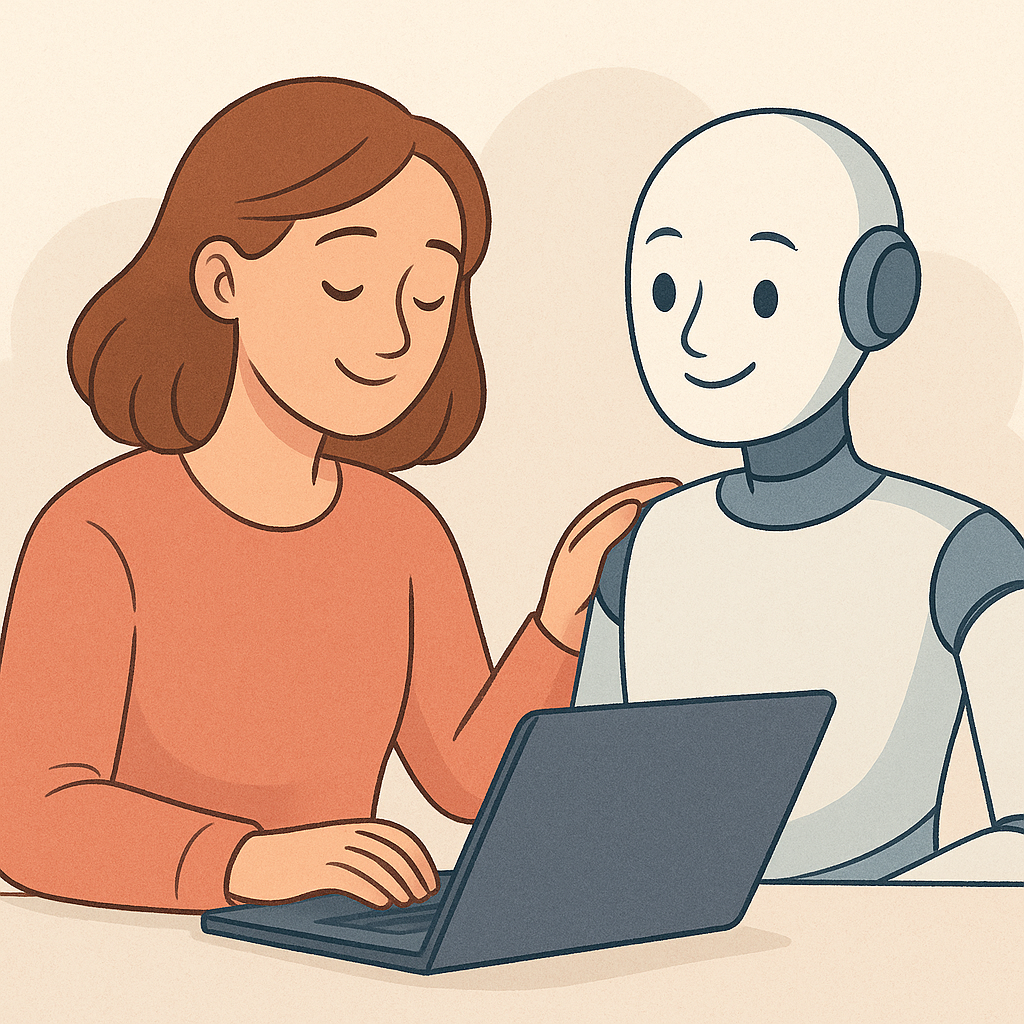
HBR's report shows a rise in the more human uses of AI.
What Does The Report Tell Us About AI Usage?
This is only the second year of the report, yet it already shows how quickly GenAI use has shifted. Some of the concerns I hear most often turn out to be much less of a problem in practice. While schools and universities rush to tackle plagiarism and academic dishonesty, research is actually the lowest-ranked use case of all. AI for learning and education is higher, in third place, but still accounts for just 16% of overall use.
Creative professionals, who have rightly fought hard for the protection of their work, might also be surprised. Creativity ranks near the bottom, and content creation has slipped from the top spot it held last year. This doesn't mean those worries aren't valid, but the data hints that something more human is driving the way we use AI.
The biggest trend by far is the rise of AI for personal and professional development, with therapy and companionship topping the table. With that in mind, I wanted to dig into the report and think about what this might mean for the human side of the future of work.
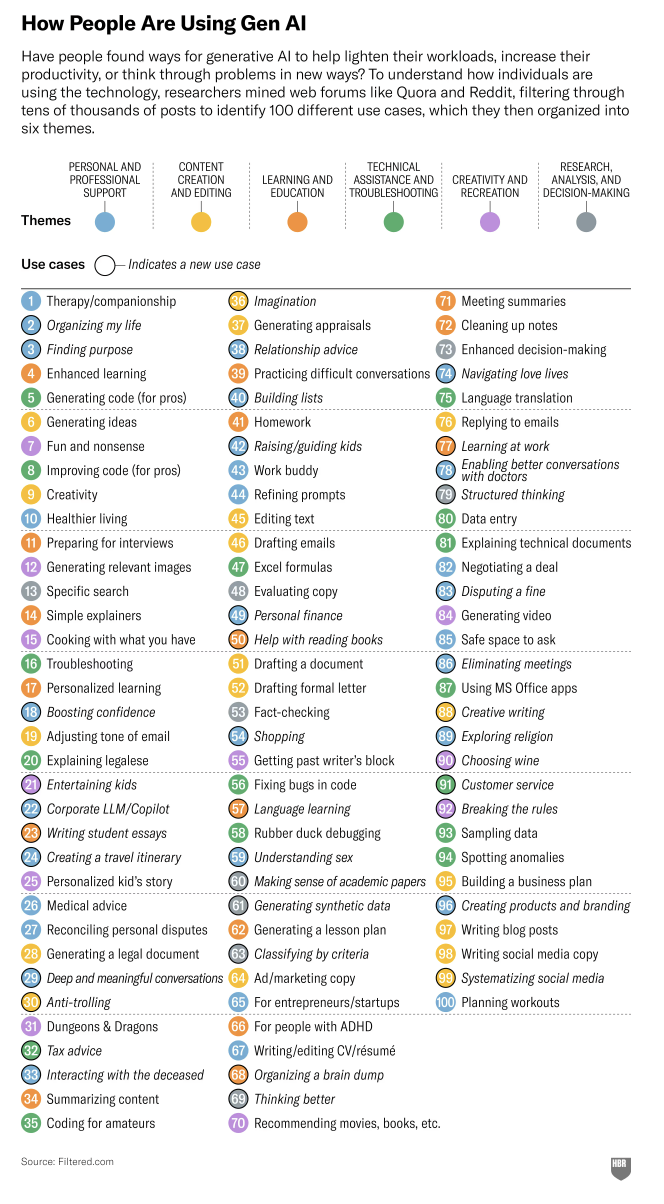
Harvard Business Review's infographic, showing the top 100 uses of GenAI in 2025. (Source: Harvard Business Review)
What Were The Most Common Professional Uses Of AI?
The highest-ranked workplace use was generating code for pros, which landed in fifth place. Improving code for pros followed closely in eighth. Coding for amateurs was much further down in 35th place, which tells us something important: AI can support technical experts, but it still needs someone who really knows what they're doing to guide it.
AI can increasingly code on its own, and there's no shortage of stories about graduates struggling to compete with automation. But the value of human-led workflows is still clear. AI works best when it's in partnership with expertise, not replacing it. In fact, AI might actually slow down software developers.
That matches the reality we're seeing elsewhere. In 2024, content creation was the top theme in AI use. This year, it slipped to second place, and when you zoom in further the most common use is actually idea generation, which ranked sixth. The act of creating content is much lower down the list. Advertising and marketing copy sits at 64th, while social media posts and blog writing are near the very bottom at 97th and 98th. To me, that suggests something quite hopeful: rather than handing over creative work wholesale, people are using AI as a springboard for their own ideas.
How Was AI Being Used For Learning?
Enhanced learning was the most common use of AI in education, coming in fourth overall. In fact, it was the most popular use case not directly linked to personal development.
I think this tells us something quite encouraging. Even with GenAI tools that can provide instant answers, many of us still want to keep learning. Using AI for self-led study points to a growing demand for personalised and flexible approaches. It also echoes what we see in the workplace, where Gen Z employees are asking for more from professional development and the ways it's delivered.
Student essay writing did appear in the list, sitting in 23rd place. The optimist in me hopes this doesn't mean students have lost their curiosity. Instead, it might say more about the limitations of traditional assessment styles. Perhaps AI could even help us rethink how assignments are designed.
What Were The Most Common Personal Uses Of AI?
The human side of AI use is where things get really interesting. The data seems to show that while AI can do many things, we still want to do plenty ourselves. We're eager to learn, to write our own code, and to generate new ideas rather than outsource creativity entirely.
But the biggest change from last year is the move towards companionship. Therapy and companionship now sit right at the top, followed by organising daily life and finding purpose.
When we talk about the future of work, we often focus on skills gaps, productivity, and the risk of job loss. Yet this shift is a reminder that the workforce is still (overwhelmingly) human. Preparing for change isn't just about data literacy or technical training. It's also about soft skills that matter just as much: resilience, adaptability, curiosity and reflective thinking.
As automation grows and more workplaces move online, there's a big question to ask: how do we make sure the future of work stays human first? For now, GenAI is stepping into that gap. Some people welcome its accessibility and affordability, while others rightly warn of its limits. Either way, it shows that even in a digital future, our human needs are at the centre of it all.