
My LinkedIn has been flooded with the "Your Brain on ChatGPT" study – the one claiming that using ChatGPT leads to “cognitive decline”. Headlines say it makes you “less engaged”, “less original”, and even “less able to remember what you just wrote”.
The research is from MIT and was published on arXiv – an open-access archive for early-stage research. It hasn’t been peer reviewed yet, which means no one has formally checked the methods or conclusions.
We’ve had a read (well, a skim – it’s over 200 pages). And honestly, the results don’t quite match the headlines.
What They Actually Did:
Gave 54 people an essay-writing task
- Split them into 3 groups:
- one used ChatGPT
- one used Google
- one used just their brain
- Measured brain activity via EEG
- After a few sessions, some participants swapped groups
- Then they tested memory and essay “originality”
What They Found (Specifically in the ChatGPT Group):
- Less brain activity (especially in areas linked to attention and memory)
- More formulaic essays
- Lower recall of what they'd just written
- Less sense of ownership over their work
They called this cognitive debt – offloading thinking to the AI and doing less mental work yourself.
(Though, for context, the Google group also showed reduced brain engagement – it wasn’t just the AI users.)
Is this even about AI?
Feels more like the same old story about tech in general. We’ve spent decades saying screens are ruining attention spans, search is changing how we research, satnavs are eroding our sense of direction…
(I recently had to relearn how to drive without Google Maps. It was humbling.)
So yes – this study adds to a growing pile of evidence that when we stop practising a skill, we get worse at it. That’s not “AI damage”, that’s just how brains work.
- Tiny sample size (54 people, one task)
- Academic essay writing is a narrow use case – what about planning, coding, rewriting, reflecting?
- Low stakes – no reason to care about the essays
- AI usage in the real world is messy and hybrid – not all-or-nothing like this study assumes
- Less brain activity doesn’t mean worse thinking – sometimes it just means a task is easier
What this does do is raise an important reminder: how we use AI matters.
Used well, it can support thinking, speed things up, reduce friction. But if you never write, never code, never reflect – your skills will fade. That’s not new. It’s just… tech.
So the question isn’t “Is AI making us stupid?”
It’s: Are we using it in a way that actually makes us better?
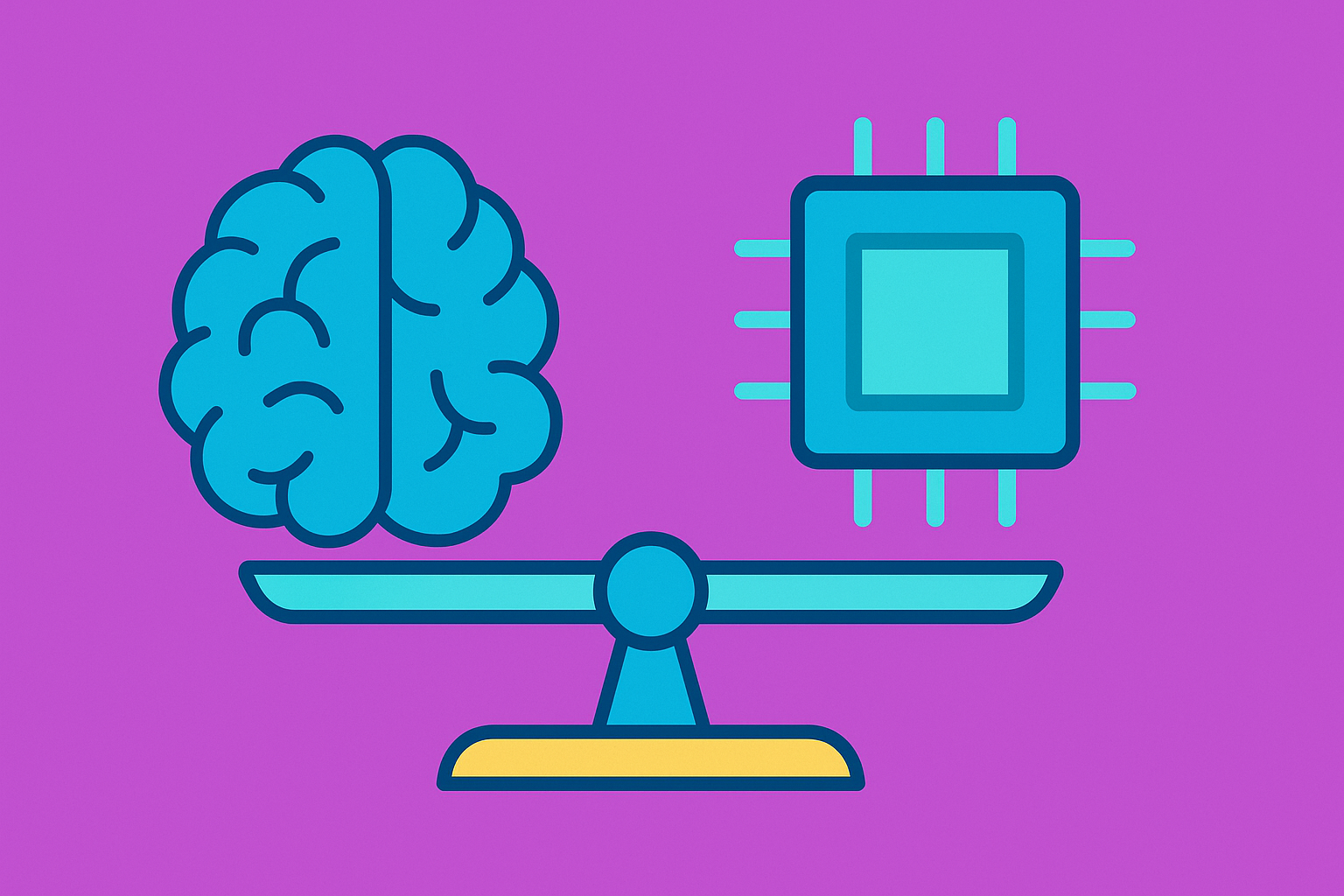
This is ChatGPT's idea of the image for this blog, so yes maybe it is giving me "cognitive decline".