
Why To-Do Lists Actually Work
There's a reason to-do lists are always one of the top productivity trends. Whether it's simple pen and paper, some beautiful bullet journalling method, or the newest software - it's all basically a to-do. But there is actually a reason why.
The Zeigarnik effect - named after Soviet psychologist Bluma Zeigarnik - describes something most of us have experienced without knowing it had a name. Unfinished tasks stay active in our brains. They create a low-level hum of cognitive load until they're done. A clear list externalises that hum. It takes the thing out of your head and puts it somewhere you can act on it.
Parkinson's Law - first written in a 1955 satirical essay - put it plainly: work expands so as to fill the time available for its completion. Give someone a week to do a two-hour task and it will, somehow, take a week. Add a real deadline and something shifts. The task becomes concrete. The brain has a finish line.
None of this is complicated, and most of us experience it every day. But it has a lot of implications for how workplace learning actually gets done - and how we make it easier for people.
What We Got Wrong In Our Construction Pilot
We recently piloted a five-week microlearning programme for AI upskilling in construction (more on that here). The simple idea: learners get an email every day, click a link, get taken exactly where they need to go, and do their 5-10 minute lesson.
That's great if everything goes exactly to plan.
Of course, people miss days - busy, on holiday, sick, not in the mood. Or they missed that they were supposed to do an additional task like a quiz or a reflection. Suddenly they're behind, they're not quite sure what they've missed, and finding out requires more effort than it should.
When we looked at the data, the problem was clear. Tasks and deadlines were scattered around the platform, and we were expecting learners to do too much work to find them. What they actually needed was one clear list, waiting for them as soon as they logged in.
So that's what we built.
What Learners See
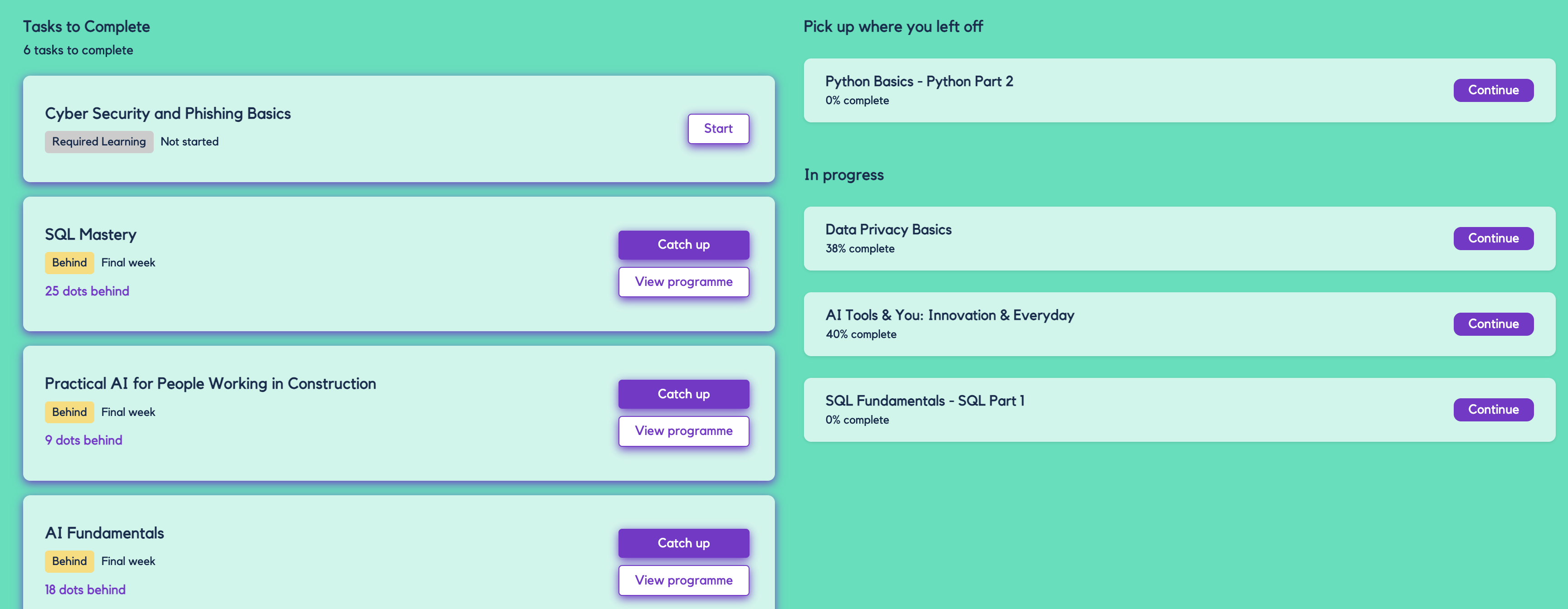
One list. Everything you need to do, and what's worth doing next.
All tasks in one place. Everything outstanding, with deadlines. No searching to find what to do. When we rolled it out internally, it turned out that despite being the person who wrote half the training, I hadn't quite finished my own cyber security onboarding. Oops.
On the left, required tasks with deadlines. On the right, suggestions - things worth doing, but not mandatory. We're already expanding this to include reminders to refresh knowledge, next steps, and project work. The list should always tell you what matters right now, and what's worth doing next.
What Managers See
Even more important than the learner view is what managers can see.
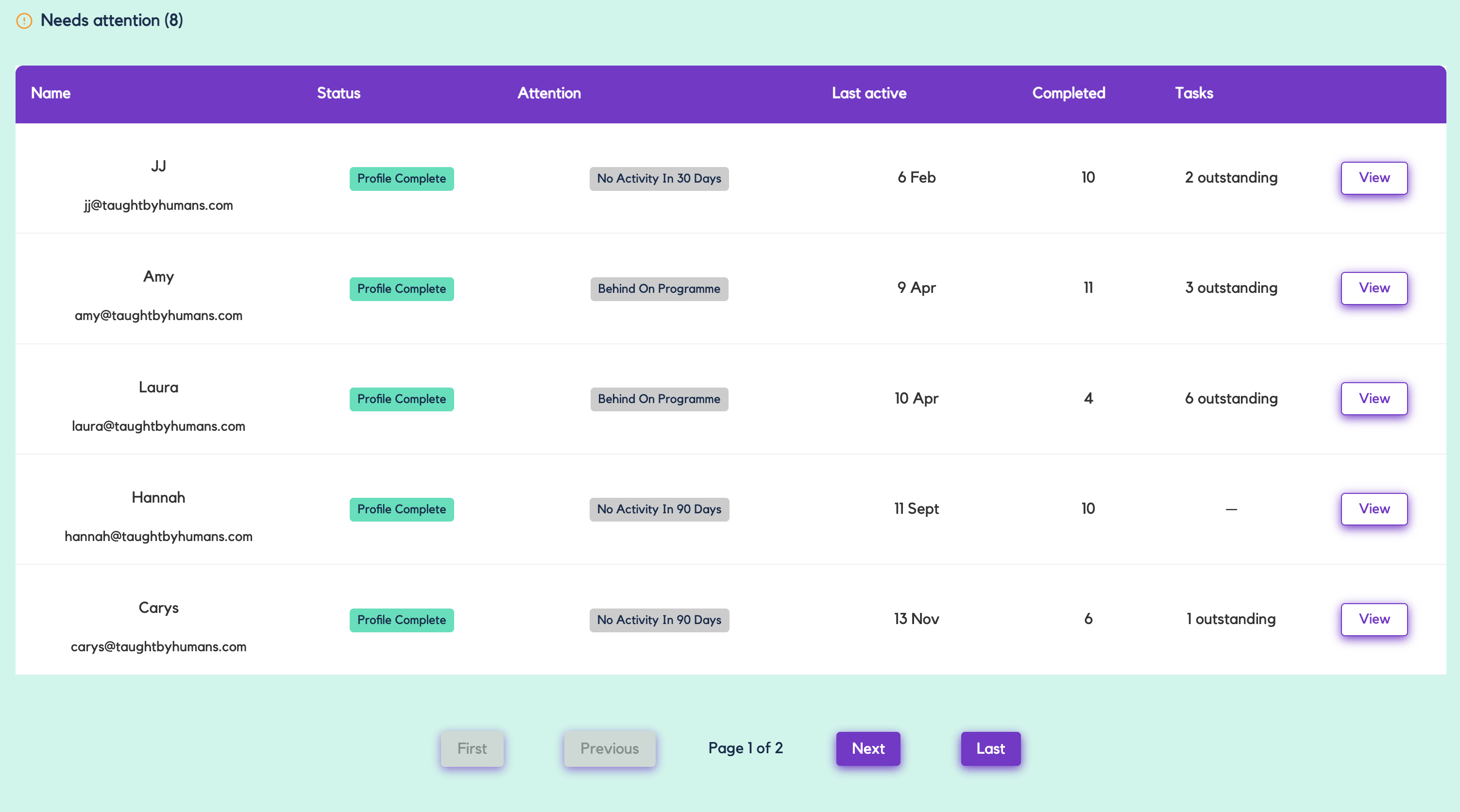
At a glance: who's behind, who's gone quiet, and what's still outstanding.
At a glance: who's behind, who's gone quiet, and how many tasks are sitting outstanding for each person. No chasing, no spreadsheet, no asking people if they've done the thing.
Click through on anyone and you get the detail - exactly what's outstanding, what's required, and what's been left untouched.
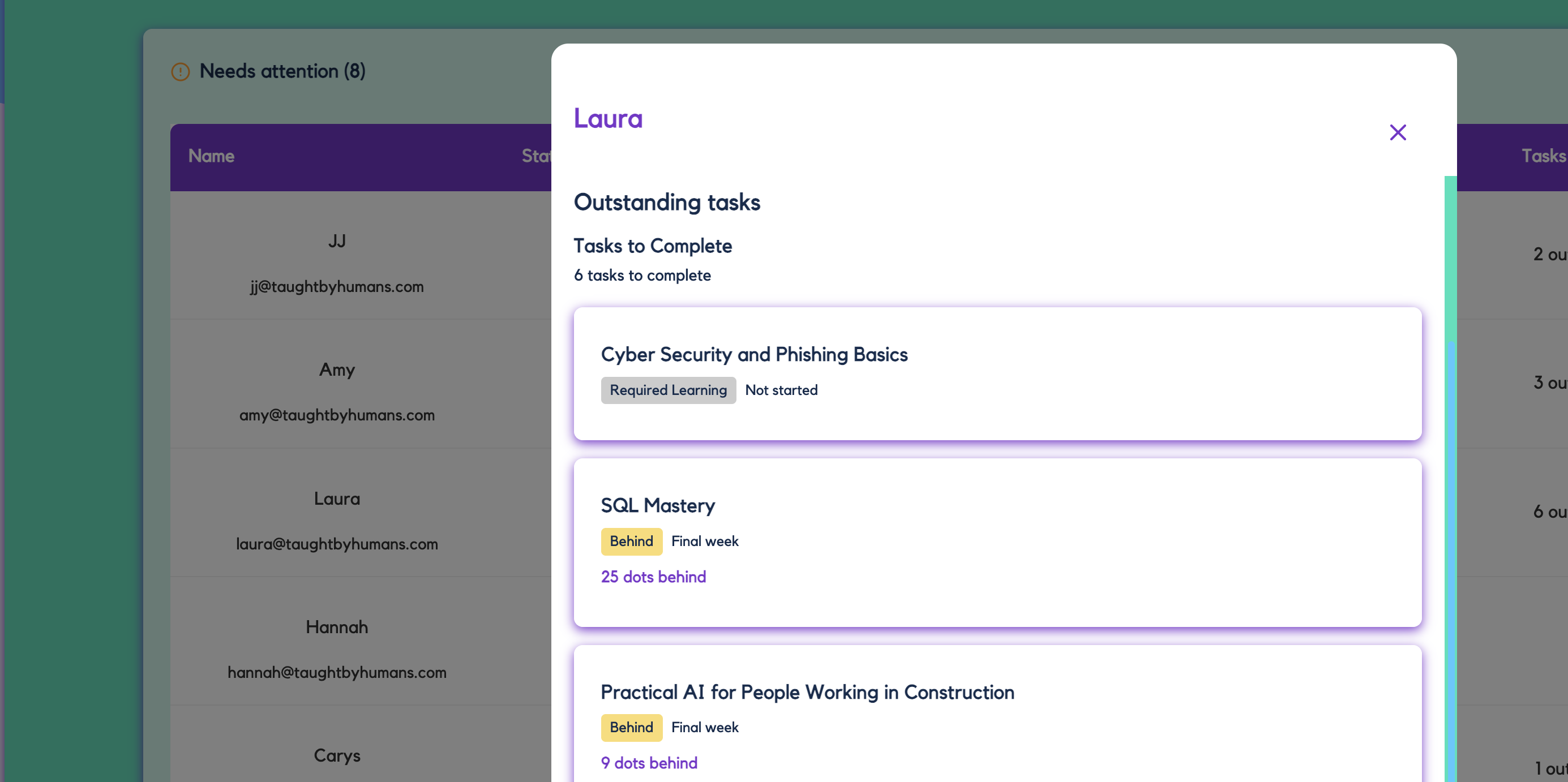
Click through on anyone and you get the detail.
For managers in regulated industries, that visibility matters. You assigned it, you can see it's done, you have the record.
Tasks And Deadlines Work. We Just Needed To Build For That.
The research is pretty clear. Unfinished tasks stay in your head until they're done. Work expands to fill whatever time you give it. And when you don't know what you're supposed to do next, you probably won't do anything.
This isn't a problem - it's just how people work. Especially at work.
People want one list. Not 10 scattered around in different places. Don't make me think is a phrase that comes to mind. If we can make learning easier for people, and their managers, it's a no-brainer.
User tasks - consider them ticked off our to-do list.