
Fresh starts are underrated
Until recently, only ChatGPT remembered what we said in other chats. Now it's being rolled out in Claude, and it's worth thinking about how this works.
Background - A Trip Down Memory Lane
Originally all these tools had a per-chat memory - they remembered what you said in one conversation, but if you opened a new chat, it was a clean slate.
Then OpenAI added the kind of creepy saving-a-memory-when-you-say-certain-things. You'd mention your job or a goal, and it would pop up a little note saying "I'll remember that". You could delete these in settings if you wanted to, but it wasn't always obvious what it had saved or why.
We're now in a slightly weird phase where the tools remember things about you, even when they're not technically in your saved memories. It's coming from your chat history, which means a lot more is being retained and surfaced than you might realise. And it's a little unnerving.
Both Claude and OpenAI also now have Projects - where instructions and files can be used across multiple chats. That's helpful in some ways, but it adds another layer to what the tool knows about you.
Claude's new memory works a bit differently. You manually tell it which chats to remember. This feels a little more intentional, and definitely a bit less creepy. But it's made me think again about whether this function is actually all that useful.
Memory Originally Seemed Like a Gamechanger
Six months ago, I would've said memory was one of the best reasons to use ChatGPT. It remembered Taught by Humans. It knew what kinds of questions I tended to ask. It could explain things in the right tone without me needing to say so each time.
But over time, I noticed how often I was opening Temporary Chats to get a clean state. Which meant I couldn't save or revisit the responses later. Something about starting from scratch felt clearer - and more reliable.
And it turns out, I'd rather have a good prompt than a half-memory.
Do Memories Make AI Tools Overfamiliar?
One of my pet hates in life is people being overfamiliar with me. And I realised that's what these AI tools were starting to feel like.
ChatGPT would make assumptions about what I wanted. It would reference a project I hadn't mentioned in weeks. It made odd links between things I didn't think belonged together. And it was hard to tell what had triggered it.
Instead of feeling helpful, memory started to feel... clingy.
What Actually Helps
The tools that work best for me now don't rely on memory at all.
- I like using Projects - where I can see the files and instructions it's using.
- I like giving it a fresh prompt, and seeing what it does without all the history.
- I like knowing that if it gives a wrong answer, it's probably because I didn't explain something well - not because it remembered something strange from July.
How to Make Memories Useful (If You're Going to Use Them)
- Check them regularly and delete ones that aren't helpful
- Turn memory off for random chats - or when experimenting
- Use project-specific memory where possible, especially when working with files
- If it gets things wrong, don't just correct it - check what it's remembered and why
For now, I've turned memory off in both ChatGPT and Claude. And it's been a bit of a relief.
There's something refreshing about starting every conversation with a clean slate. And these tools are still remarkably helpful - even when they don't know who I am.
How to Edit Settings
Claude
Click your icon in the bottom right corner > Settings > Capabilities
Turn memories on or off
ChatGPT
Click your icon in the bottom right corner > Personalization
You have a few options
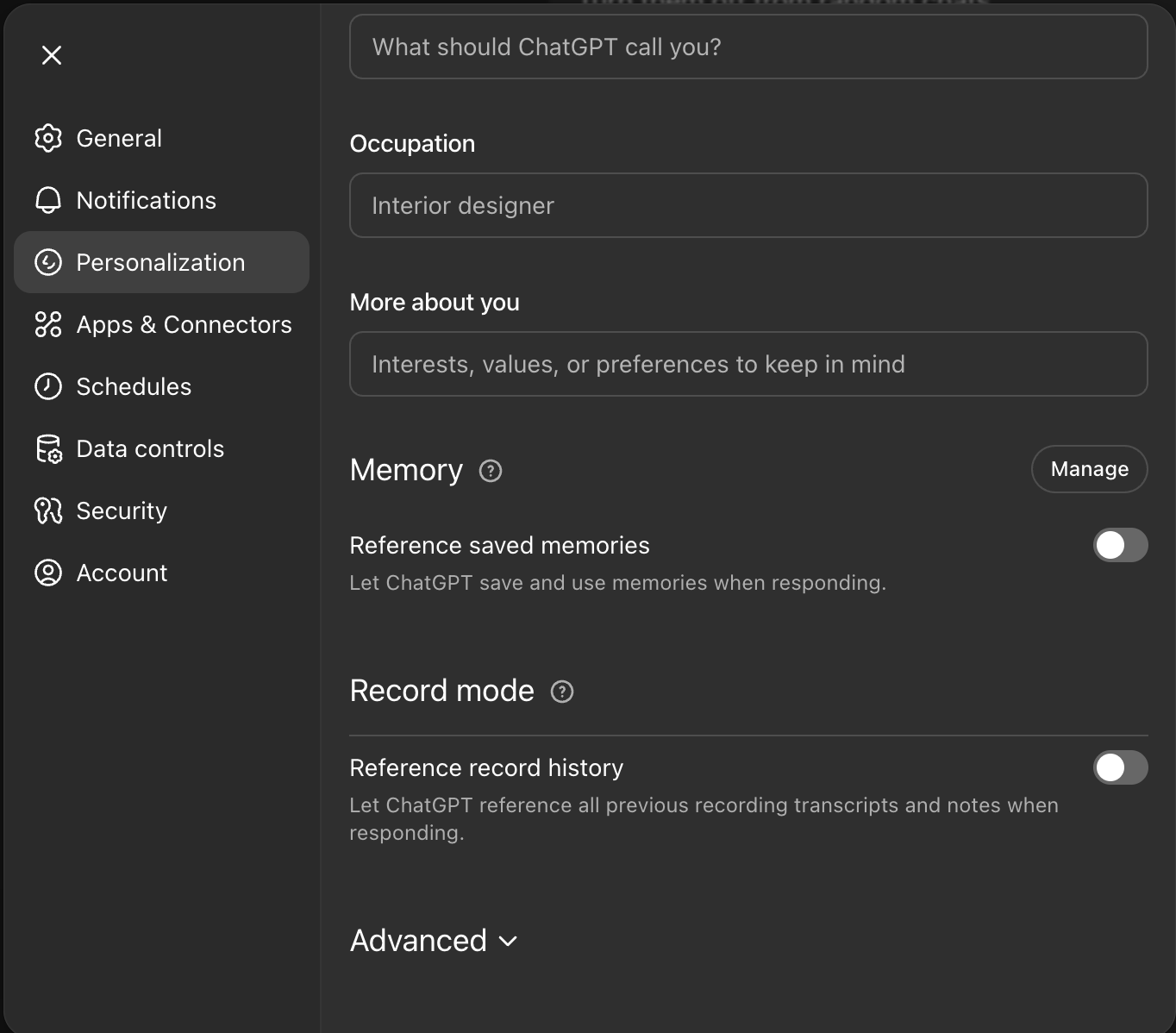
ChatGPT memory settings
- Manage - where you can delete memories
- Reference saved memories - this turns on or off ChatGPT saving random memories and using them
- Reference record history - allows ChatGPT to reference voice notes etc