We do not believe all learning is equal. And we firmly do not believe that completing something means you have learnt it. True workplace learning needs you to be able to confidently apply something in multiple situations in your job - without them necessarily following a textbook example.
How Confident Are You?
As with all learning platforms, we have a Mark as Completed button. Which is useful - but it does not tell you much. Done could mean they read it carefully and understood it well. It could also mean they skimmed it at 11pm and moved on.
Confidence levels change that. Instead of a single completion status, your team now sees where they actually are on every topic they have covered.
The Five Levels
There are five confidence levels, each with a plain-English description:
- Learning - you have made a start, keep going to build a solid foundation
- Learnt - you understand the basics, the groundwork is there
- Remembered - you can explain this, but have not had much chance to apply it yet
- Comfortable - you can talk about this naturally and connect it to your work
- Confident - you are applying this in your own context, you could explain it to someone else
These are not self-reported. Your team does not pick where they are. The platform sets the level based on what they actually do.
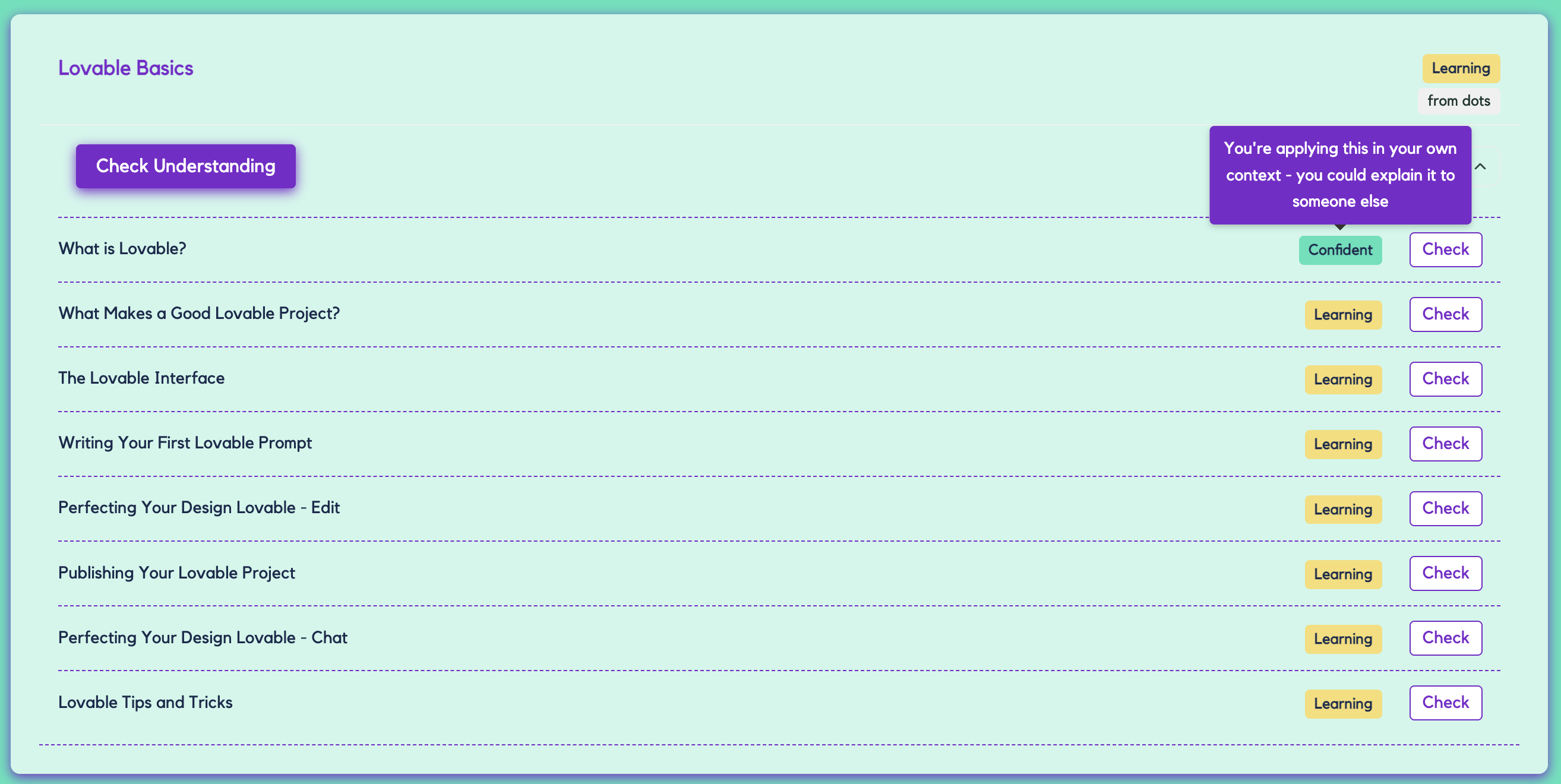
Every dot in a journey shows its current confidence level - and learners can check or recheck their understanding at any time.
How The Level Gets Set
Different activities give different evidence, and the platform treats them accordingly.
Reading a piece of content puts someone at Learning. They have seen the material - but seeing something is not the same as understanding it.
A quick check (multiple choice) can take someone up to Remembered. It tests recall, so it has a ceiling. Recognising the right answer in a controlled quiz is not the same as being able to apply something at work.
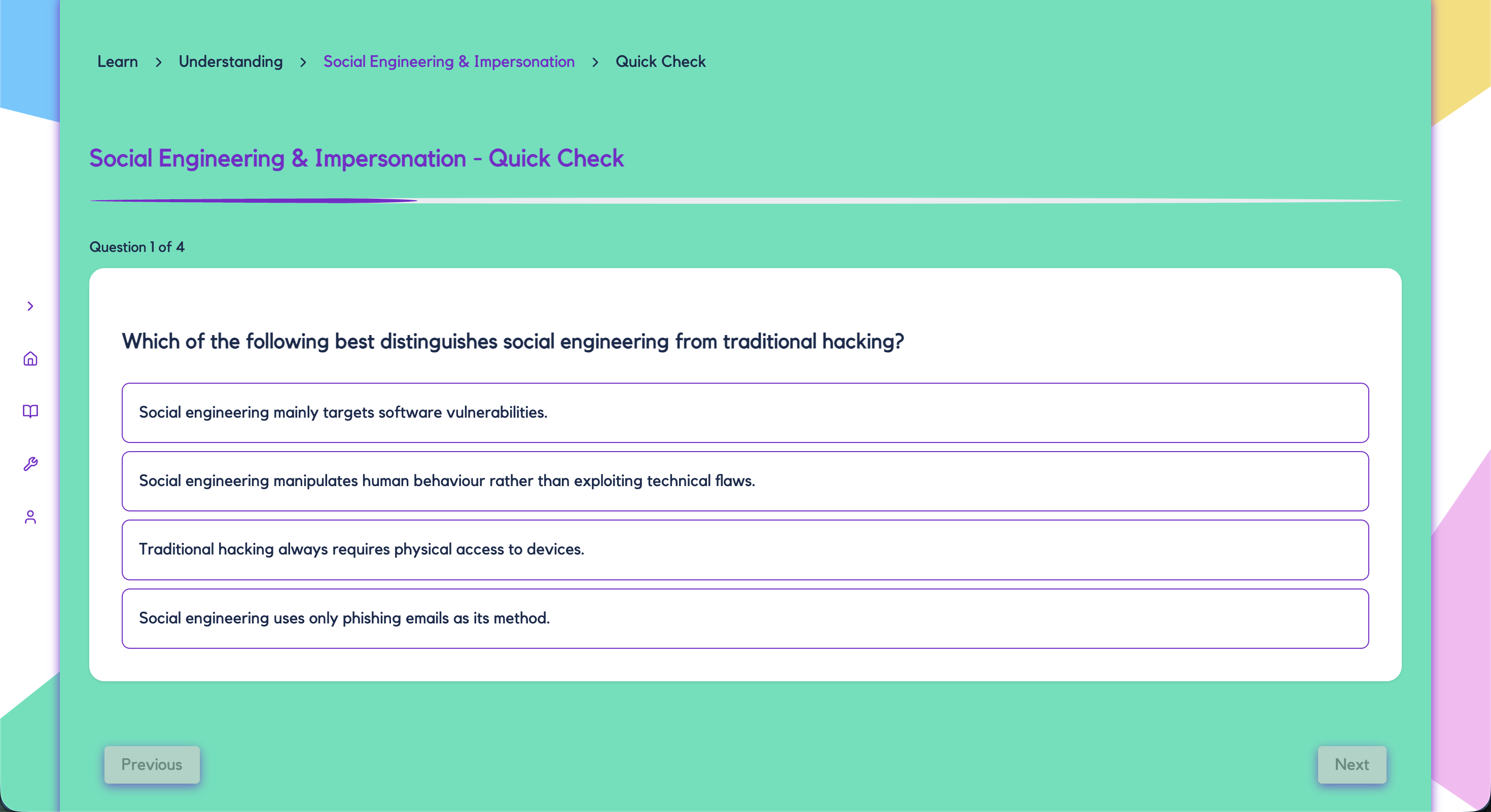
A Quick Check tests recall - useful, but it has a ceiling. Recognising the right answer is not the same as being able to apply it.
A deep dive - written answers assessed by AI - can reach Comfortable or Confident, if the answers show the learner connecting what they have covered to their own work and context.
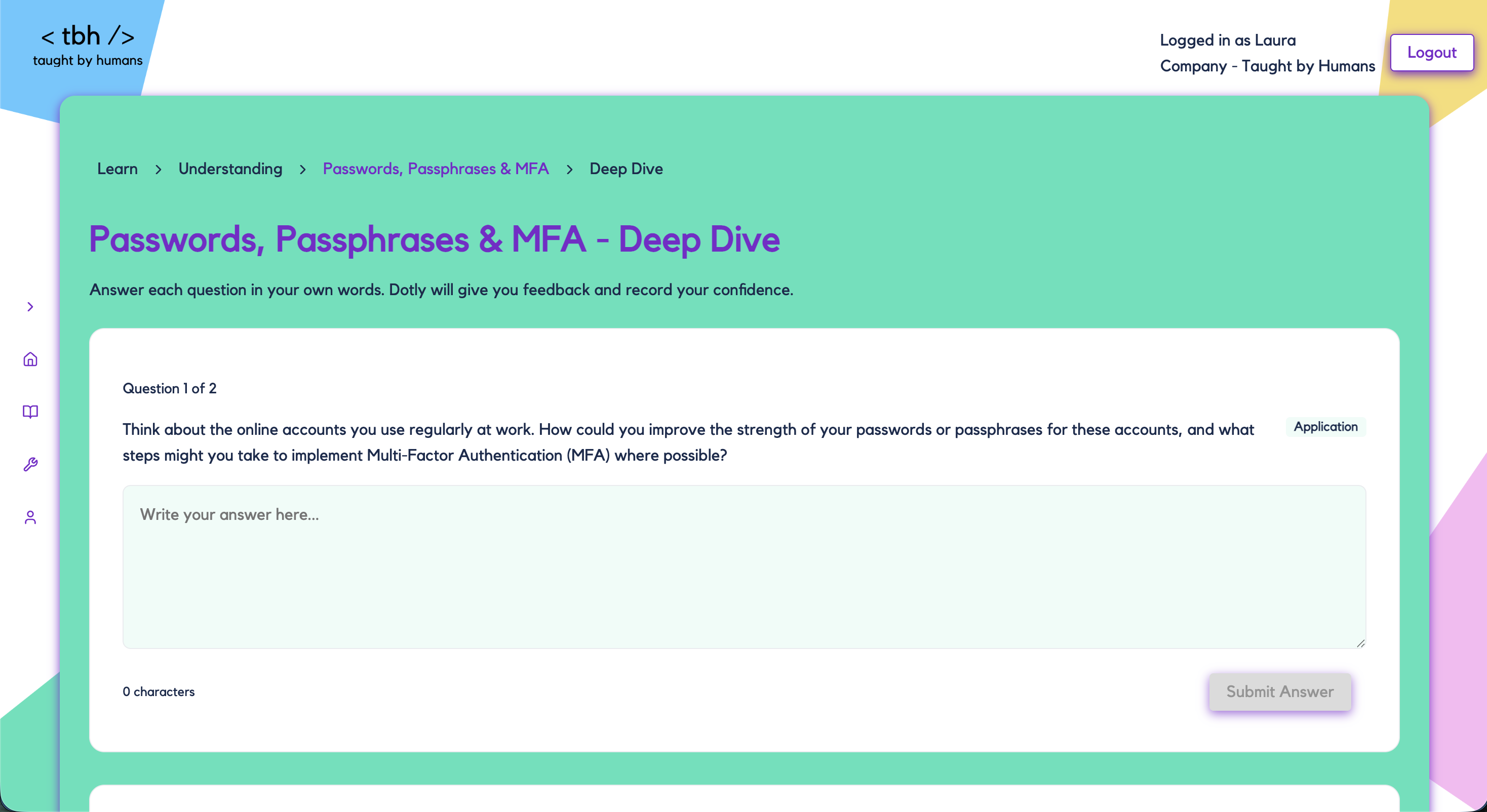
A Deep Dive asks learners to answer in their own words, applied to their own context. That is what can get someone to Comfortable or Confident.
An assessment chat with Dotly is the most nuanced signal. A real conversation about what has been covered, not a quiz.
And the best bit - learning with Dotly can get you straight to Confident (and any levels in between), skipping all the assessments.
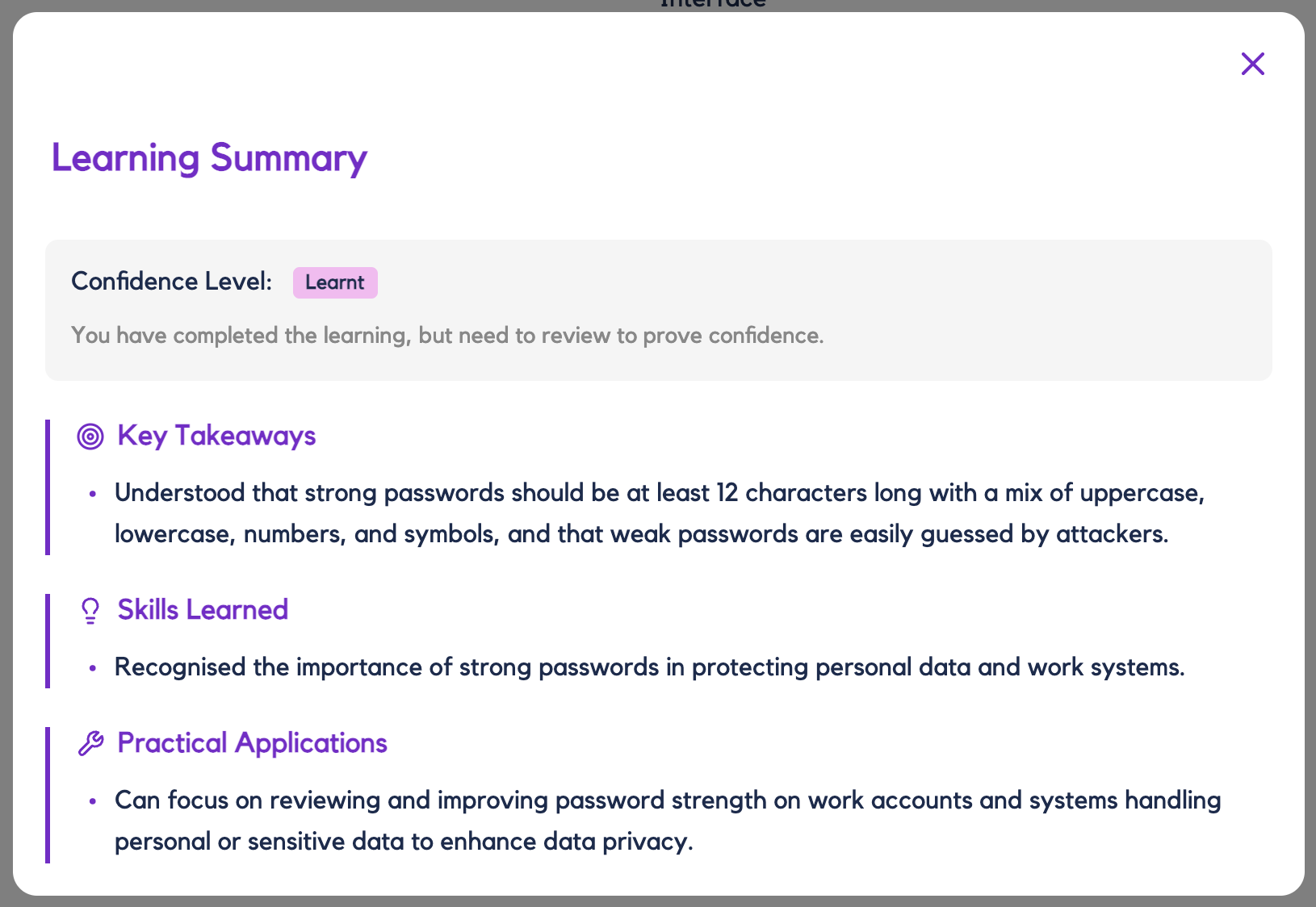
After learning with Dotly, learners get a summary of what they covered - and their confidence level based on how the conversation went (this one did not get confident)
Completing Something And Understanding It Are Different Things
A learner who has read everything and learned with Dotly has not formally evidenced their understanding yet. The platform knows the difference, and so will they.
Scores Can Go Down - But Carefully
If someone reassesses and does worse, their confidence can drop. But only by one level at a time. One difficult session does not undo genuine prior understanding.
This Framework, Our Confidence Architecture, Makes Workplace Learning Better
We are confident (excuse the pun) that our Confidence Architecture makes workplace learning better for everyone - whether it is speeding up mandatory training, getting your team onboarded faster, or helping them navigate AI.