
Around a million 16-24 year olds in the UK are now out of work, education or training. New hiring fell to just under 540,000 in April 2026, the lowest monthly figure since 2021. You've probably seen versions of these stats everywhere, and it's sent people into a real panic.
My LinkedIn is flooded with posts about how 'the job market is cooked' (basically the job market is doomed), and AI is always the villain. I can't escape it in real life either. The other day I mentioned I work at an AI startup, and the first thing they brought up was how AI is stealing everyone's jobs.
But Is AI Really to Blame?
Personally, I'm in two minds. On one hand, AI is creating jobs, and good ones. PwC's AI Jobs Barometer found AI-skill postings jumped from 112,000 to 180,000, and those roles pay well, with specialists commanding a 34.2% wage premium.
On the other, it's shifting the hiring landscape in a way that hurts entry-level most. Entry-level roles increasingly expect skills that used to sit a level up. The same report found that in the US, postings for entry-level roles asking for traditionally senior skills grew 35% since 2019, and I see it happening in the UK too. When I was applying for data internships back in 2025, it was clear that coding alone isn't enough anymore. Vibe coding has taken care of the easy stuff, so what's left to bring is the harder part: complex, strategic decision-making on top of the code.
Maybe AI is the cause, maybe it's an easy scapegoat. Either way, there's a skills mismatch between what employers want and what entry-level candidates have.
What Skills Does A Data Analyst Actually Need?
What do I mean by that? Let me explain, with a quick guessing game.
Think of a data analyst. What skills would an employer actually want from one?
If you guessed Power BI, SQL and Python, you're not wrong, that's what most data analyst roles advertise for. But here's the catch: so many candidates have exactly those skills that having them doesn't make you stand out. They're oversupplied.
What employers are actually short on, according to a government report, are complex skills like data governance and data engineering (which are actually jobs in their own right).
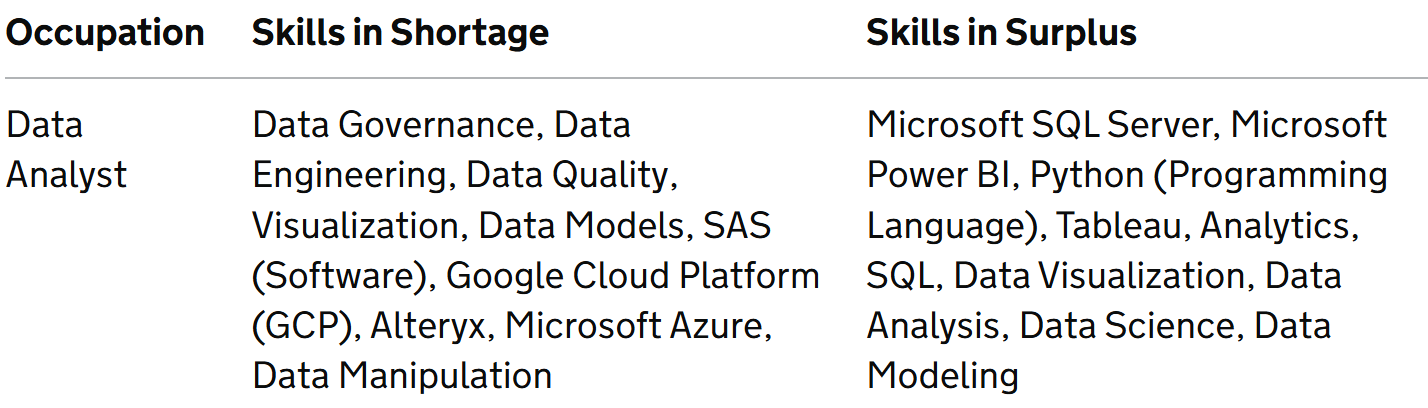
Skills in surplus vs shortage for data analyst roles from 'A snapshot of entry-level hiring in the UK'.
Those are the skills that win the role, and they're the ones most entry-level applicants don't have yet. That's why data analyst is so hard to get into right now.
But that doesn't mean your Python, SQL and Power BI skills are redundant. It means they're pointed at the wrong target. Those same skills are in demand elsewhere, in roles that just don't happen to be called data analyst (e.g. BI Developer or Data Governance Analyst).
Once Again: Search By Skills, Not Titles
I know I've repeated myself over and over in my previous blogs, but it's true: search for the job that wants what you've got, not the title you assumed matched your skills.
Since most job boards aren't built for skills-based matching, the most rational thing to do is to fight fire with fire. AI is what reshaped the job market in the first place, so it makes sense to use AI to navigate it.
And I'm not the only one who thinks this. The government recently released its own AI work assistant chatbot that claims to help you find the right role. Since here at Taught by Humans we like testing new AI tools, I put it to work on skills matching.
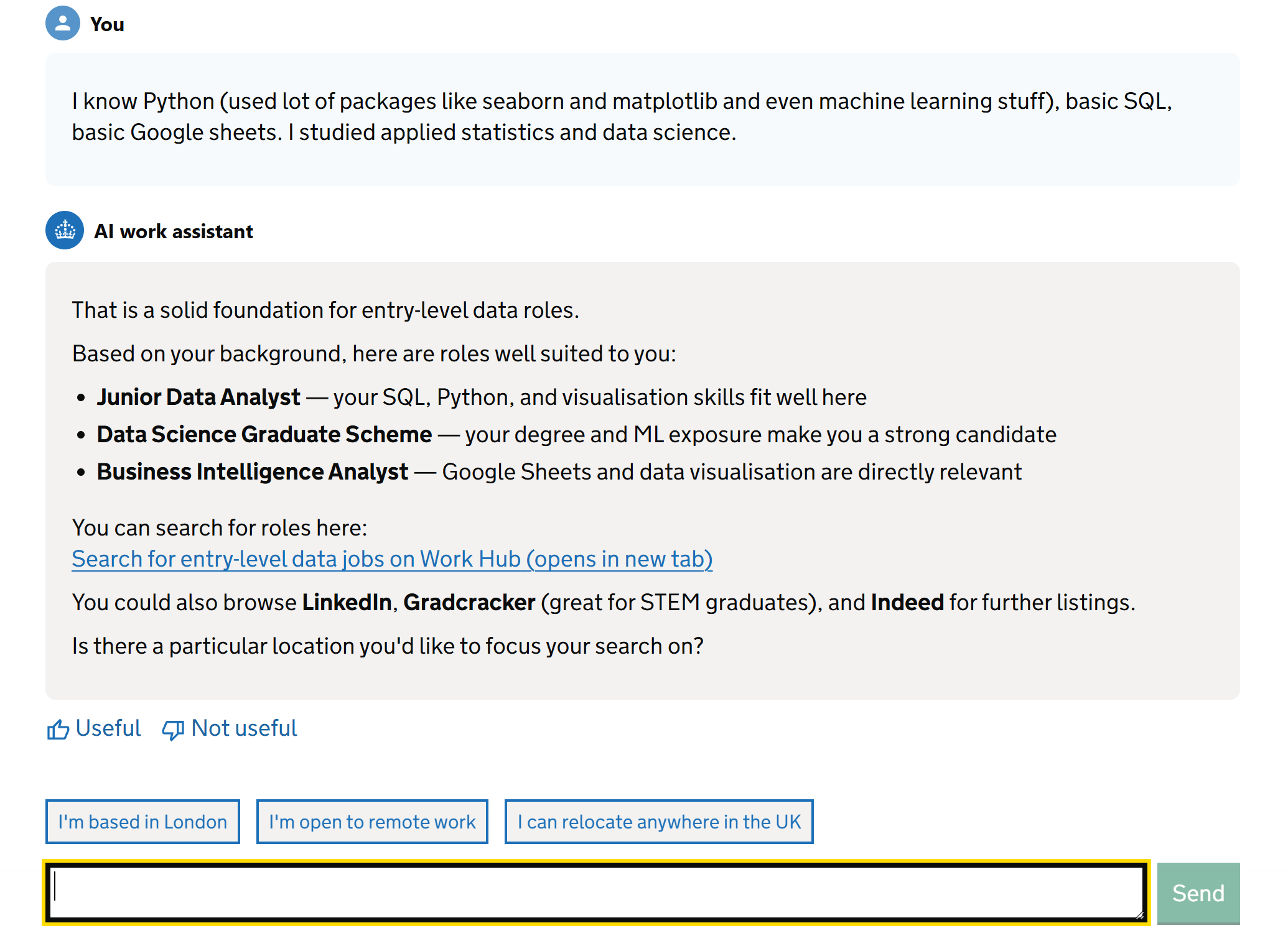
Conversation with the government's AI work assistant, after I gave it my skills.
It gave back generic job titles and pointed me at a standard job board. Slightly disappointing (and honestly I could've looked that up on Indeed myself).
Call me biased, but the government chatbot has nothing on Dotly. I put Dotly to the same test and it came back with more diverse roles and actual live listings.
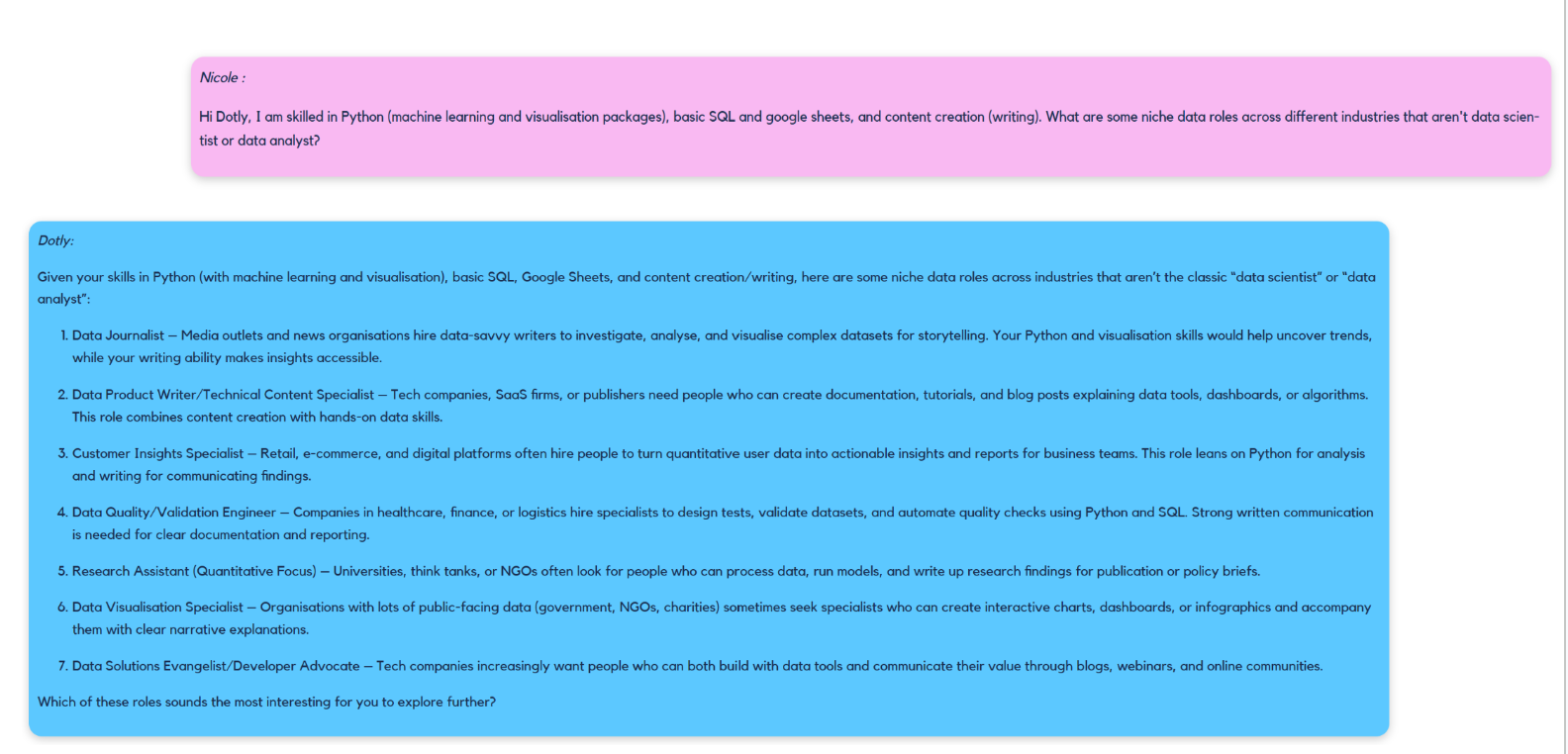
Dotly recommends data career options tailored to the user's listed skills.
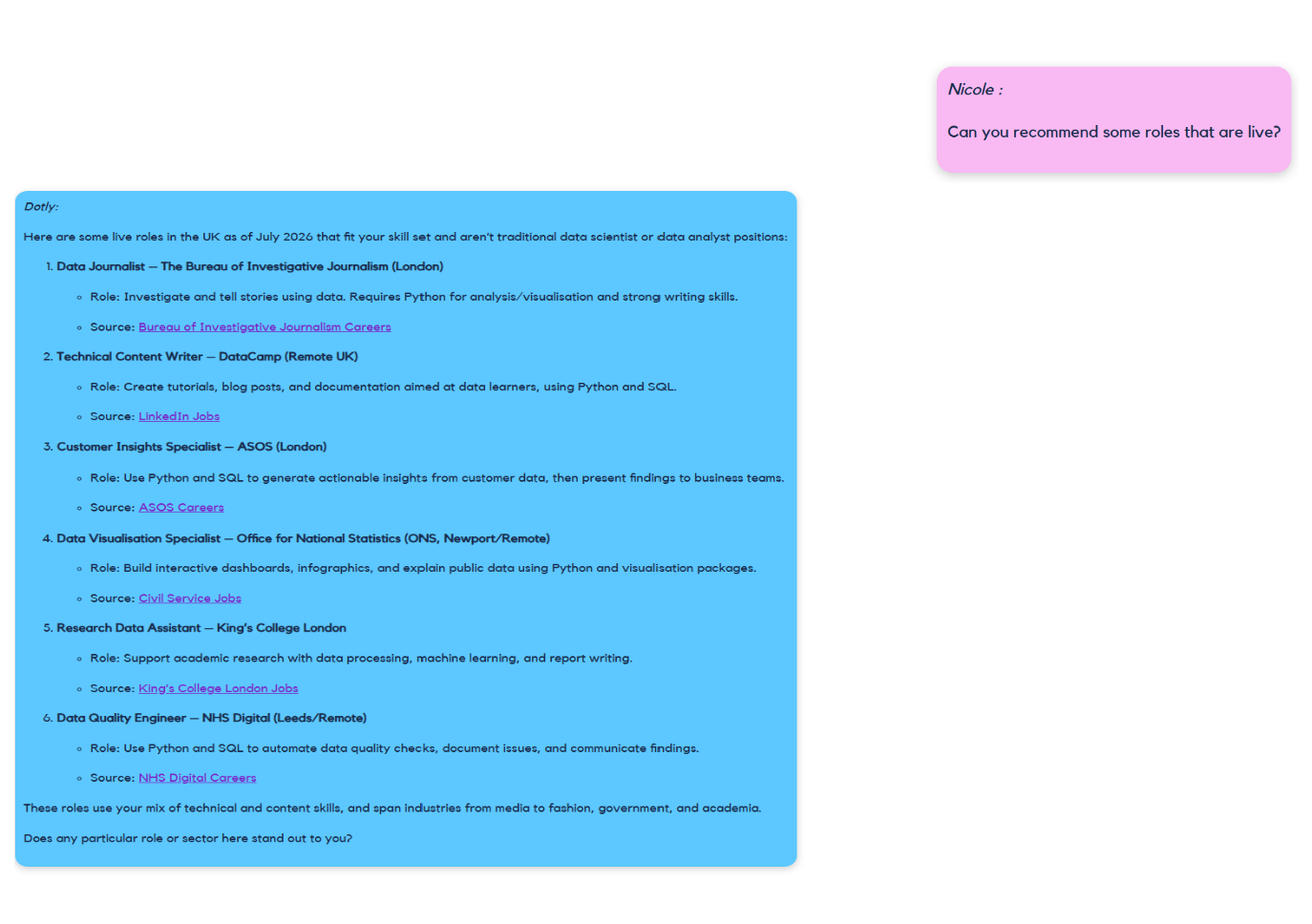
Conversation where Dotly presents live listings for data-related jobs.
What sets it above generic chatbots (like Claude and ChatGPT) is the personalisation. I can tell Dotly my preferred work environment and it builds a profile of my skills over time (if you want to see how I used Dotly to job-hunt, read this blog: here).
The Final Part
This is the last of the four-part series on the entry-level jobs crisis, told from the perspective of someone actually living it. I hope you enjoyed the accounts, or took something new away from them.
Unfortunately, there's no running away from the truth: the pool of entry-level intake is shrinking year on year. But there's no use dwelling on it. There's always something we can do to make it better.
On that note, some good news. We've won two grants to help bridge people in the South West into entry-level AI roles. So if you're looking for a role, or you have one you'd like to advertise, we'd love to hear from you here.
I'm heading back to university for my final year, so this is about to be my reality too. Fingers crossed things are looking up by the time I graduate.