
I hate to admit I actually started writing this comparison a month ago. But there have been so many new releases and tools to play with, it sort of slipped off my radar.
However, yesterday I saw a sneaky new button on Claude offering me Research as a Beta.
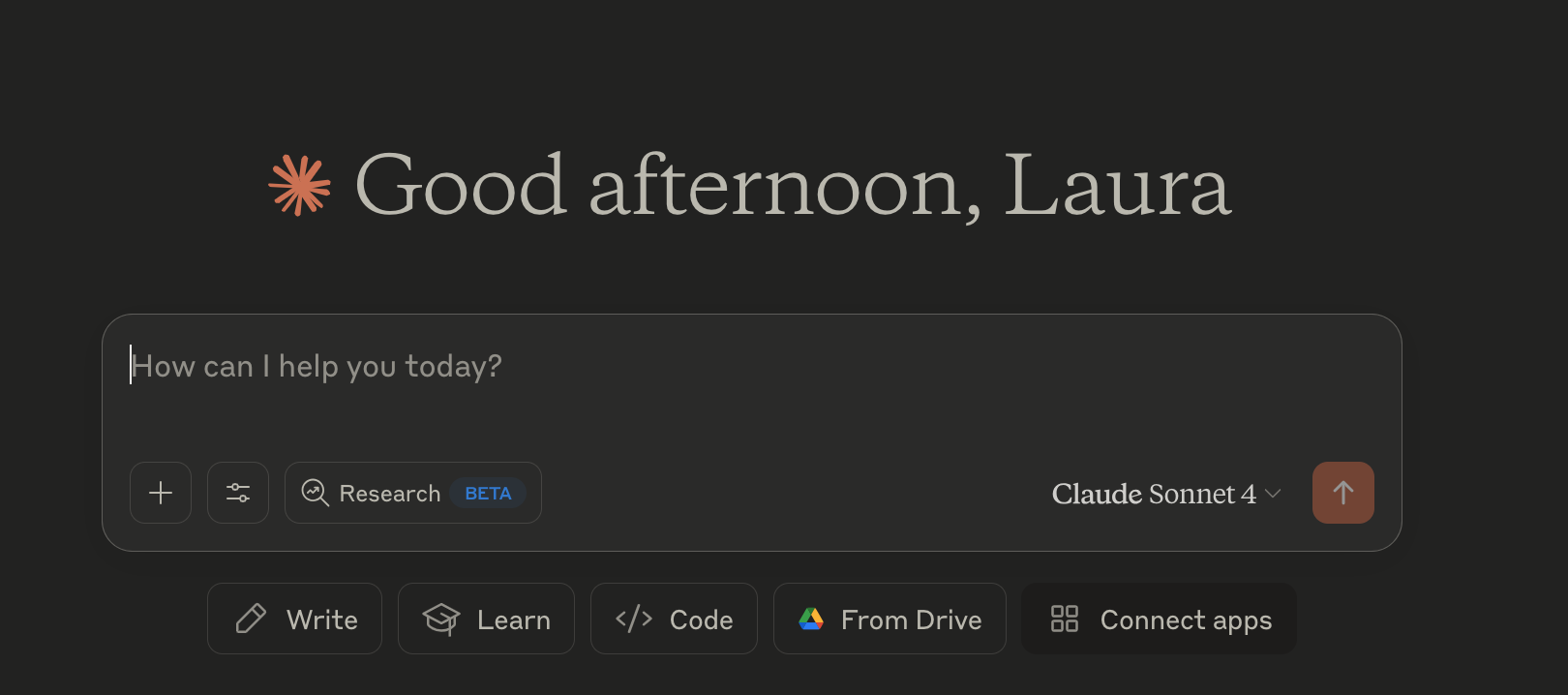
Claude Research Beta Button
Previously this had only been available to Claude Max users (paying roughly $100 a month), whereas I’m a pro user (paying $20).
What is Deep Research?
Deep Research, to me, seems really academic - like something you’d do for a research paper. I don’t necessarily use these AI tools in that way, I usually use AI to speed up content creation or chat through ideas, not read 30 journal articles. I found the output from ChatGPT’s Deep Research when it came out to be slow and hard to digest (source). It took 17 minutes and produced a 3,000-word report I found hard to read.
Let’s Put Them to the Test
ChatGPT, Claude and Perplexity that is.
As far as I could see Mistral does not have a specific Deep Research feature, and I didn’t think it was a fair fight to include Microsoft Copilot as I’m really not a fan as I find it chunky and not as good as ChatGPT or Claude. But if you’re interested you can read about their version of Deep Research.
Writing this I realise I totally forgot about Gemini which also has a research option. So it’s going to be a four horse race. Maybe a bit unfair, I don’t pay anything extra for Google AI (and honestly I don’t know what I get as part of my Google Workspace). I do get the cheapest paid version for the others (~$20 a month and usually called Pro).
Who Are Perplexity?
Perplexity is not as well known as ChatGPT and Claude - it is a specific AI chatbot for search and research. It uses other models (such as Claude Sonnet 4 and OpenAI o3) as well as having their own models. They were one of the first to have web search, and are extremely popular (not proven by data but anecdotally people in the startup world, particularly uni spin outs, seem to love Perplexity).
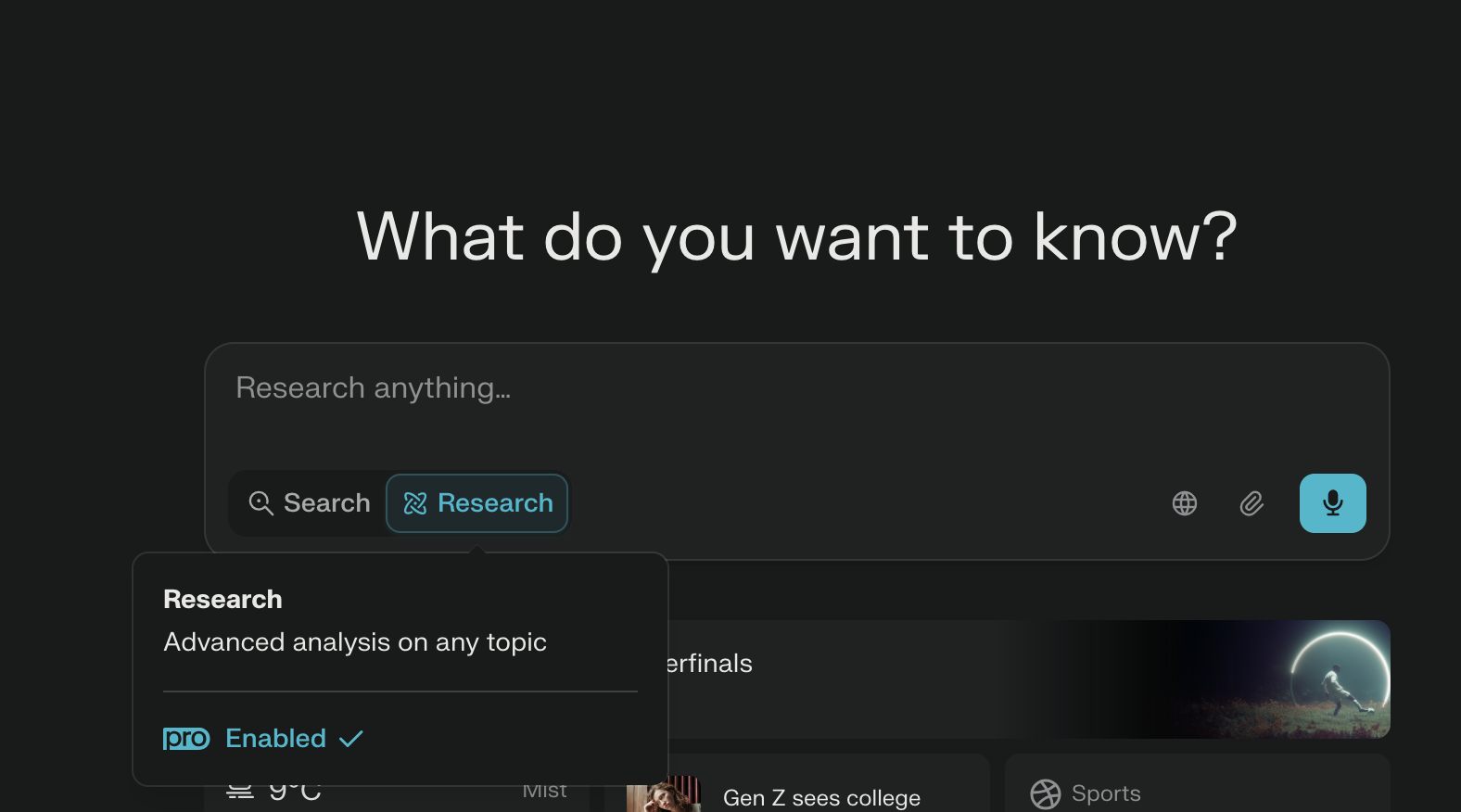
Perplexity AI
For all but Perplexity Deep Research is a button to press in the chat interface.
Task
It makes sense to give them all the same task to have a fair comparison. I decided to do something relevant to Taught by Humans.
L: I want to understand more about the options for learning about AI (mostly focused on the UK, and secondary Europe but worldwide differences are interesting).
How Am I Measuring the Results?
Understanding the Assignment
Perplexity just jumped right in, and just got started on the research.
ChatGPT and Claude asked questions to clarify what I wanted.
Both of these chatbots took that I personally wanted to learn more about AI (rather than understand the landscape). Which I think is more of an issue with my prompt than their response. But it was good to get an opportunity to explain and give more information.
Gemini did something different - a plan which I could edit:

Gemini's Research Plan
I can see how that approach works for more academic research or when the steps of the research are well defined. But if it was some sort of scoping exercise, the approach of the other three feels more natural.
Speed
Perplexity and Google were fast!
Claude was 11 mins, and ChatGPT was 17 mins.
Content
Gemini focused a lot on university education. Even the first section of the short courses was ones run by universities. An interesting aspect of the Gemini report was the section on informal learning (e.g. Meetups), and a specific table with AI jobs.
Most of the Claude content was commonly discussed (e.g. Coursera figures). But it did link to an open proposal from the EU which is really relevant to what we do! Perplexity had the most structured format - with headings like “Russell Group Universities Leading AI Education” - rather than just generic University Education ones. However I didn’t feel any of the content was necessarily new. The ChatGPT content was in-depth. The comparison across regions was much more detailed and opinionated than the others.
Readability
Gemini’s was very long, with long paragraphs and big words. Definitely felt academic. But had useful tables throughout. Claude’s was the shortest. It was very high level compared to the others, and had no tables. This made it really easy to skim read and get the information quickly. Perplexity’s structure made it the nicest to read for me. No tables, but clearer sections. ChatGPT gave the longest output. It had loads of detail and 28 sources. It was exhausting to read (good use of headings and bold to skim read if needed) - but the summary table at the end was very handy and easy to copy.
Usability
All of them were fairly similar to use. Gemini had the best export options - straight to Google Docs, plus the ability to turn the research into a quiz or presentation.
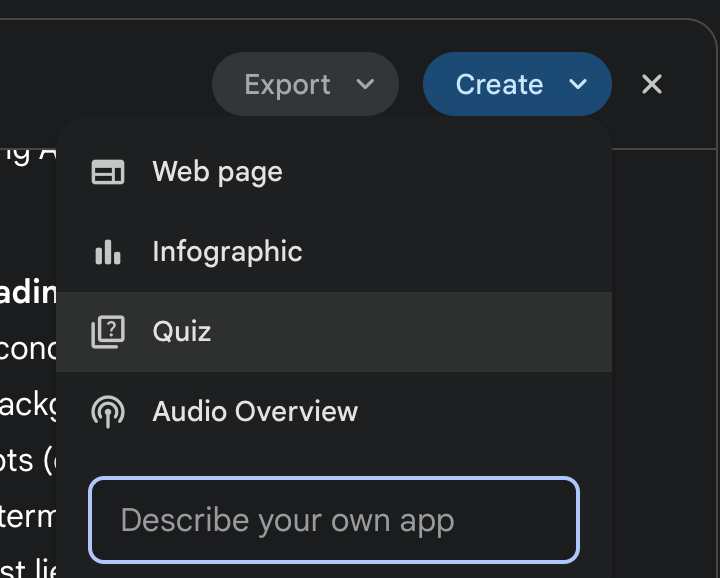
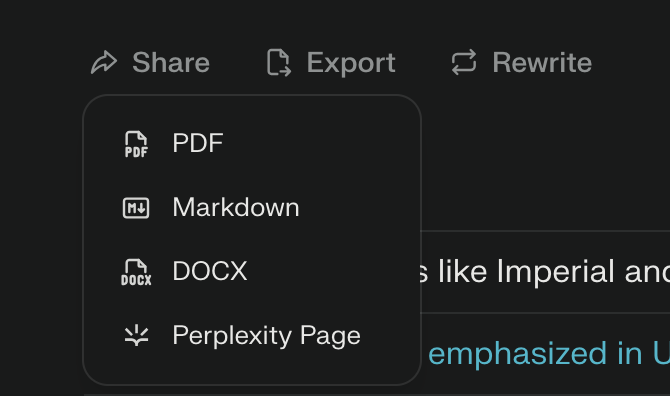
Gemini and Perplexity's Export Options
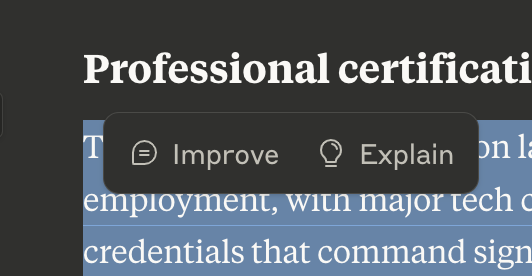
ChatGPT and Perplexity let you easily share links and download as PDFs. They both kept the references intact. They also both allow you to quote bits of the report in the chat to refine or ask questions on. Claude allows publishing to a public link or can be copied straight to Google Docs (with nice formatting), but doesn’t include references when exported that way. Claude allows highlighting bits of the report and asking Claude to explain or improve which I found useful.
Claude Allows Improving
Trust
Perplexity definitely understood what good sources look like - it gave me 49 references, mostly .ac.uk or gov.uk. Very little fluff. Claude read 608 sources (phew!), but a lot of those were random blogs. I didn’t trust it as much. To be fair, Anthropic is leaning into coding use cases with Claude, so maybe they value forums and blogs more in that context. ChatGPT used 28 sources, mostly solid, but did include the odd wildcard (e.g. DigitalOcean). It also referenced the same source multiple times (which comes across as a little weighted to certain ideas). Gemini didn’t say how many sources it used, and it felt like more than Perplexity - but again, a lot of random blogs. A small win though - none of the links I checked were broken or hallucinated.
So is Deep Research All That?
None of them were perfect. Claude gave me the most useful surprises. Perplexity felt the most trustworthy. ChatGPT went deep but took forever to read. Gemini looked polished but felt like reading a policy doc. They’re all getting better - but whether Deep Research is useful really depends on how much time (and patience) you have. Or maybe I need to learn how to use it better (or go back and forth a bit to get a more me report).
A Final Thought
All focused on university as the main educational offering, with everything else framed as the alternative.